


Starting used to require a lot more.
If you wanted to build a website, you needed to understand code or know someone who did. Starting a publication meant dealing with hosting, design, distribution, and a dozen other things before anyone could read a word. Building software required enough technical knowledge just to get an idea onto a screen.
Most ideas died before they had a chance to become anything.
That has changed.
Today, I can have an idea in the morning and have some version of it online before the day is over.
I can ask AI to help me think through the concept. I can design the interface visually. I can start with a template instead of a blank canvas. I can connect tools that would have required custom development not that long ago.
The distance between idea and first version has collapsed.
That should mean we’re finishing more things than ever.
I’m not sure we are.
Because while technology has made starting dramatically easier, it hasn’t solved the much less technical problem of deciding when something is finished.
We solved the wrong bottleneck
For a long time, access was the problem.
You needed specialized knowledge, expensive software, equipment, distribution, or permission.
A lot of those barriers are disappearing.
AI can help you write code you don’t completely understand. Design tools can turn an empty canvas into a functioning website. Platforms can handle payments, email, hosting, analytics, and distribution without you building the infrastructure yourself.
These are incredible advantages.
But once the technical friction disappears, something interesting happens.
The remaining friction becomes much easier to see.
Judgment.
Focus.
Taste.
Commitment.
The willingness to choose one direction when ten others are available.
And eventually, the ability to say:
This is enough. Put it out.
No tool can completely make that decision for you.
More possibility creates more unfinished work
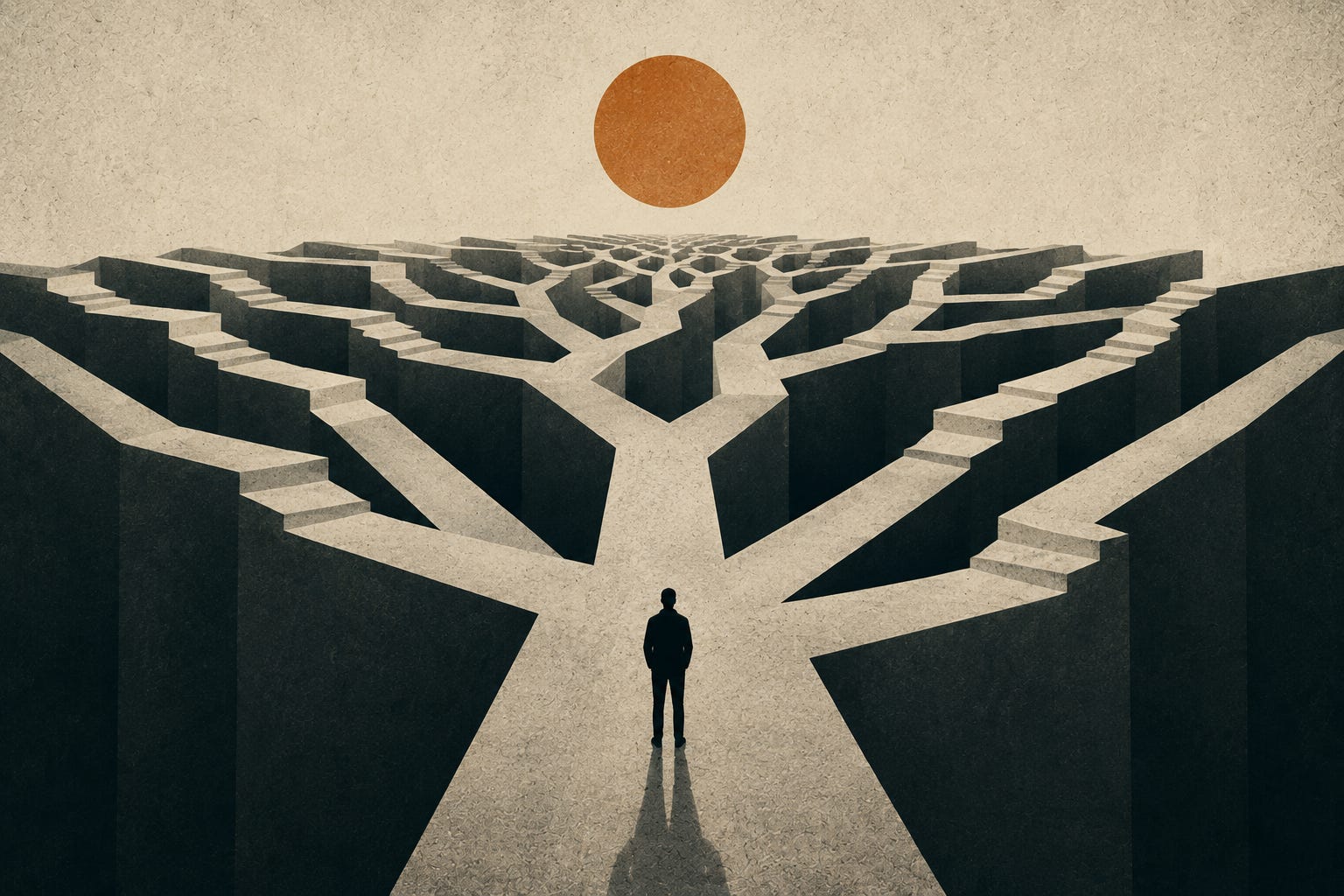
The old limitation was often, I can’t make this.
The new limitation is often, I could make this a hundred different ways.
That sounds like a better problem.
It is.
But it’s still a problem.
When changing direction costs almost nothing, direction becomes disposable.
You can rebuild the homepage.
Try another font.
Change platforms.
Generate twenty versions of the copy.
Add another feature.
Ask AI for ten alternative ideas.
Buy another template.
Reconsider the name.
Start over because the new version might be better.
And technically, you’re working the entire time.
That’s what makes it dangerous.
Procrastination doesn’t always look like doing nothing anymore.
Sometimes it looks like endless optimization.
There is always a better version
This is something I’m learning to be more aware of in my own work.
I like refinement.
I care about how things look, how they function, how the pieces fit together, and whether the final result feels intentional.
Those are useful instincts until they become an excuse to keep something private.
Because there is always another improvement available.
Always.
Give me another day and I can change something.
Give me another week and I can probably make it noticeably better.
Give me another month and I might rethink the entire thing.
That doesn’t necessarily mean I should.
At some point, improving the work and avoiding its release begin to look suspiciously similar.
The difficult part is recognizing when you’ve crossed that line.
Finishing requires constraints
Unlimited possibility sounds creative.
In practice, constraints often produce more finished work.
A deadline is a constraint.
A defined feature set is a constraint.
A publishing schedule is a constraint.
Choosing one platform is a constraint.
Deciding that version one only needs to solve one problem is a constraint.
Without those boundaries, a project can expand forever.
I’ve started thinking about projects less in terms of everything they could become and more in terms of what the current version needs to accomplish.
That distinction matters.
The first version of something doesn’t need to contain its entire future.
It just needs to justify the existence of a second version.
That makes finishing much easier to define.
Shipping changes the kind of information you have

Before something is released, most of your decisions are based on assumptions.
You think people will understand it.
You think a feature is important.
You think the design works.
You think the idea is interesting.
You think you’ve anticipated the problems.
Then someone actually uses it.
Suddenly, you’re working with reality.
The thing you spent hours perfecting might barely matter.
The small detail you almost ignored might be the thing everyone notices.
Someone might use what you made in a way you never considered.
Or nobody might care at all.
That information can be uncomfortable, but it’s useful.
You can’t get it from another week of polishing.
The unfinished version in your head can remain perfect indefinitely.
The finished version has to survive contact with other people.
That’s where the real work begins.
AI makes this even more important
AI has made the temptation to keep generating especially strong.
There is always another answer available.
Another variation.
Another concept.
Another image.
Another implementation.
Another way to say the same thing.
Generation used to be expensive.
Now it’s nearly infinite.
That changes the value of the skills around it.
When producing possibilities becomes cheap, choosing between them becomes more important.
Taste matters more.
Editing matters more.
Knowing what to remove matters more.
Knowing when to stop matters more.
The advantage isn’t simply being able to generate more.
Everyone can generate more.
The advantage is being able to look at endless possibility and decide:
This one.
Then do something with it.
Finished doesn’t mean permanent
I think part of the hesitation comes from treating publication like a permanent decision.
It rarely is.
Websites change.
Products evolve.
Writing gets sharper.
Ideas mature.
Brands change direction.
Software gets updated.
The version you release today doesn’t have to represent everything you’ll ever be capable of making.
It represents what you were capable of making now.
That’s enough.
The internet made iteration incredibly cheap.
We should probably take advantage of that instead of trying to make every first version feel final.
Publish it.
See what happens.
Learn something.
Change it.
That’s not lowering the standard.
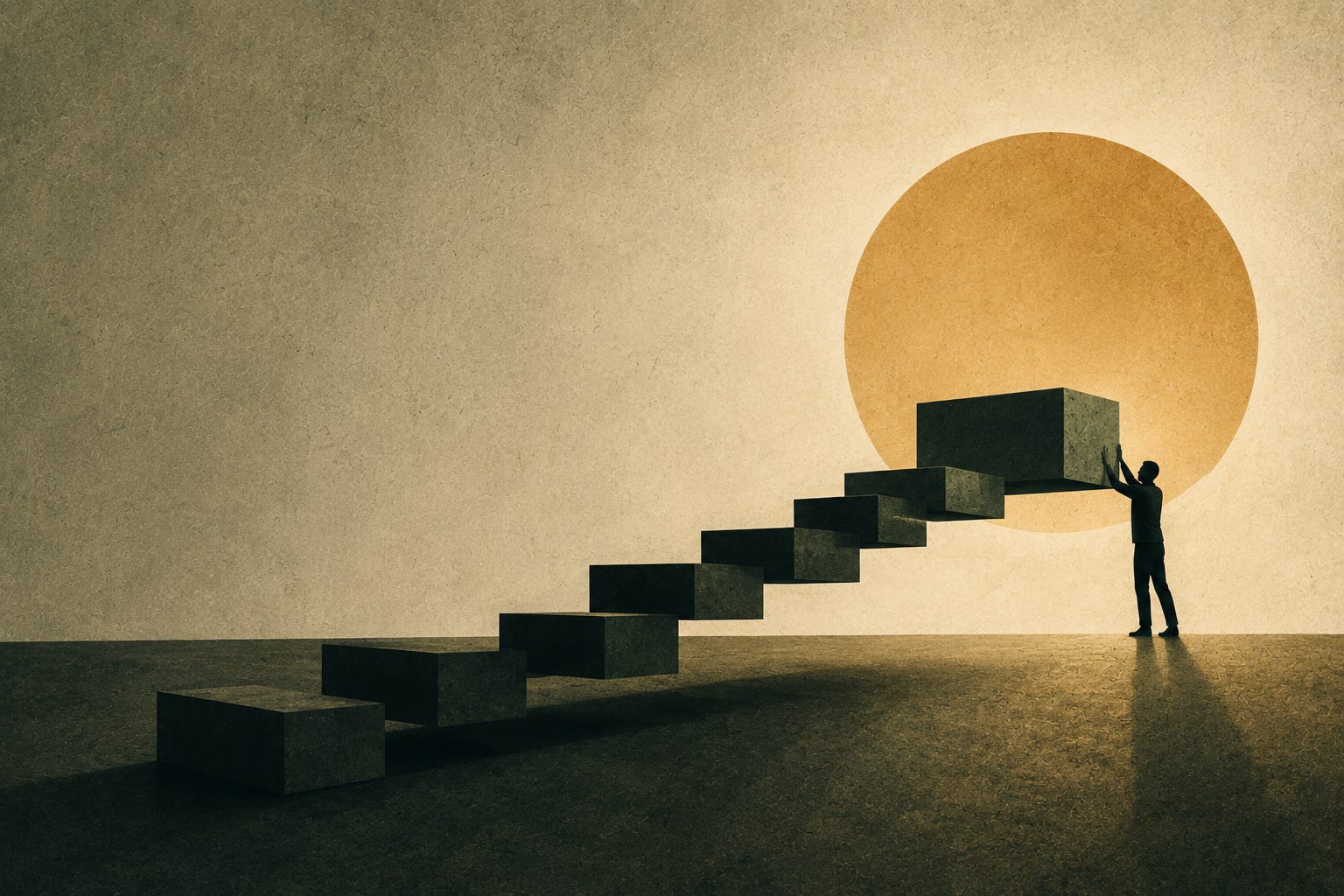
It’s giving the work somewhere to go.
The new skill is finishing
We don’t have a shortage of tools.
We don’t have a shortage of information.
We definitely don’t have a shortage of ideas.
What we have is an environment where starting something new is constantly rewarded.
A new project feels exciting.
A blank canvas is full of possibility.
A new tool makes you imagine everything you could make with it.
Finishing is different.
Finishing means closing doors.
It means choosing one version over all the versions that could have existed.
It means allowing the work to become imperfectly real instead of potentially perfect.
Technology can’t remove that discomfort.
I’m not sure I’d want it to.
Because when almost anyone can start, the ability to finish becomes more valuable.
The tools will keep getting easier.
The distance between thinking of something and making something will keep shrinking.
We’ll be able to create more, faster, with fewer technical limitations than ever before.
But eventually, someone still has to make the call.
Stop generating.
Stop tweaking.
Stop preparing.
Finish something.